
If you have been trying to restore your foreskin and progress feels impossibly slow, there is a good chance you have been approaching it with incomplete information. Forum posts give you fragments. YouTube videos show you one technique. But nobody explains the full picture of how tissue expansion actually works and what you need to optimise at every stage.
The reason most men stall is simple: they treat restoration as a single-variable problem when it is actually a four-variable system. Technique is only one piece. Skin conditioning, consistency architecture, and progress tracking are equally critical - and ignoring any one of them undermines everything else.
That is the insight behind the 4-Phase Foreskin Restoration System. It was developed by Daniel Mercer, a restoration researcher who spent over a decade studying why some men achieve full coverage in under three years while others plateau for decades, before synthesising the common factors into a comprehensive, repeatable framework.
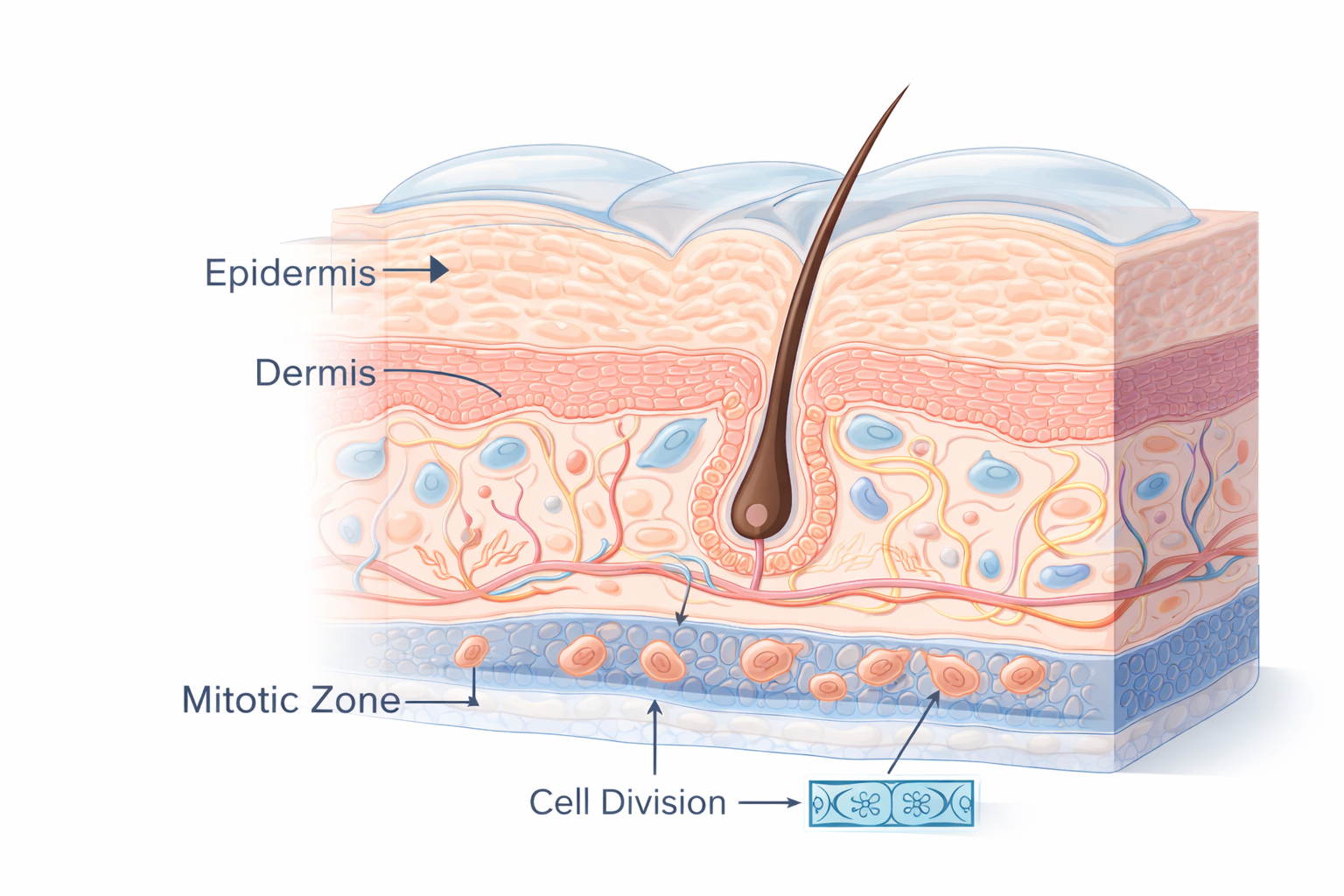
The biological mechanism behind tissue expansion - mitosis in response to sustained tension
The 4 Phases Explained
Tissue Expansion Science - Understanding the Mechanism
Foreskin restoration works through mitosis - the process by which skin cells divide in response to sustained, gentle tension. Phase 1 teaches you exactly how this process works, what tension levels trigger growth versus damage, and how to calibrate your approach based on your starting point. Without this foundation, every technique is just guesswork.
Manual Technique Mastery
There are multiple manual methods, each suited to different coverage levels and anatomy. Phase 2 provides detailed, step-by-step instructions for every major technique - when to use each one, how to apply correct tension, how long each session should last, and how to transition between methods as you progress through the coverage index stages.
Skin Health and Conditioning
Healthy, well-conditioned skin expands more efficiently than dry, irritated skin. Phase 3 covers the topical routines, hydration strategies, and skin care protocols that optimise your tissue for growth. This is the phase most men skip entirely - and the one that often explains the gap between fast restorers and chronic plateauers.
Consistency Architecture and Progress Tracking
Restoration is a marathon, not a sprint. Phase 4 gives you the habit-building frameworks, scheduling templates, and progress measurement tools that keep you on track through the inevitable motivation dips. This is where the system transforms from "something you try" into "something you complete."
The 4 Key Signs Your Approach Needs Adjustment
No Measurable Change in 8+ Weeks
If your CI level has not shifted after two months of consistent effort, your tension, duration, or frequency likely needs recalibrating. The system shows you exactly how.
Skin Irritation or Soreness
Redness, micro-tears, or persistent soreness means you are over-tensioning. More is not better with tissue expansion - the guide teaches the optimal zone.
Inconsistent Daily Practice
If you are skipping days or doing sessions of wildly varying length, your tissue never gets the consistent signal it needs to trigger sustained mitosis.
Motivation That Crashes Regularly
If you cycle between intense effort and complete breaks, you are losing accumulated progress. The system builds a sustainable rhythm that survives real life.
These four signals tell you that your current approach has gaps. The good news is that every one of these problems has a specific, actionable solution - if you address all four pillars simultaneously.


Why Most Men Plateau
The single biggest reason men plateau in their restoration is that they treat it purely as a mechanical problem - just tug enough and it will happen. But tissue expansion is a biological process governed by tension calibration, skin health, cellular recovery time, and psychological consistency.
A man who tugs with perfect technique but has dry, poorly conditioned skin will grow tissue slower. A man with great skin health but wildly inconsistent sessions will never trigger sustained mitosis. And a man who does everything right for three weeks then burns out and stops for a month loses much of his accumulated progress.
The 4-Phase system works because it addresses all four variables at the same time. When you understand the science, master the technique, condition your skin, and build unbreakable consistency, your tissue finally has everything it needs to expand efficiently. That is when real, measurable progress begins.

The System in Practice
Everything described in this article - the tissue expansion science, the step-by-step manual techniques, the skin conditioning protocols, the consistency architecture, and the progress tracking tools - has been compiled into a comprehensive digital guide called Foreskin Renewal.
Hundreds of men have used it. The system is delivered as an instant download - no subscriptions, no recurring payments, no complicated devices required. Just the complete roadmap to structured, evidence-based foreskin restoration.